People rarely remember exact routes. They do not remember coordinates, headings, or nautical terms. They rarely remember how many miles were covered or which bay came first.
What they do remember is how the day felt. This is the difference between a sailing day and most other travel experiences in the Cyclades. A ferry trip delivers you somewhere. A bus drops you off. A beach visit fills a few hours. Sailing, when done properly, creates a sequence of moments that stay connected long after the boat returns to port.
Memory at sea does not come from spectacle, it comes from rhythm.
A day shaped by experience, not schedules
A memorable sailing day begins before guests are aware of it. Long before the first line is cast off, decisions have already been made based on the weather forecast, the direction of the wind, and how the sea has behaved over the last few days. This is where experience matters most.
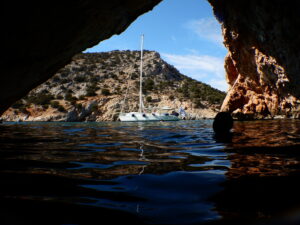
Captain George brings more than forty years of professional yachting experience to every sailing day, much of it spent navigating the waters of the Cyclades. He understands that the Aegean does not reward rigid plans. It rewards attention. The forecast is not treated as a promise or a threat, but as guidance. Waves are observed, not challenged. Routes are selected that move through calm bays, pause near a quiet beach, and adapt naturally as conditions evolve.
Guests rarely notice these adjustments. They simply feel that the day flows. That sense of ease is not accidental. It is the result of thousands of days spent reading the same sea from slightly different angles.
Moments that unfold, not activities that compete
A sailing day does not ask guests to choose between relaxation and activity. It allows both to exist without conflict.
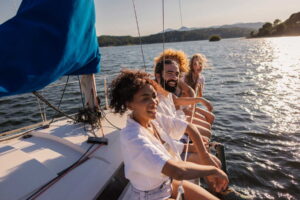
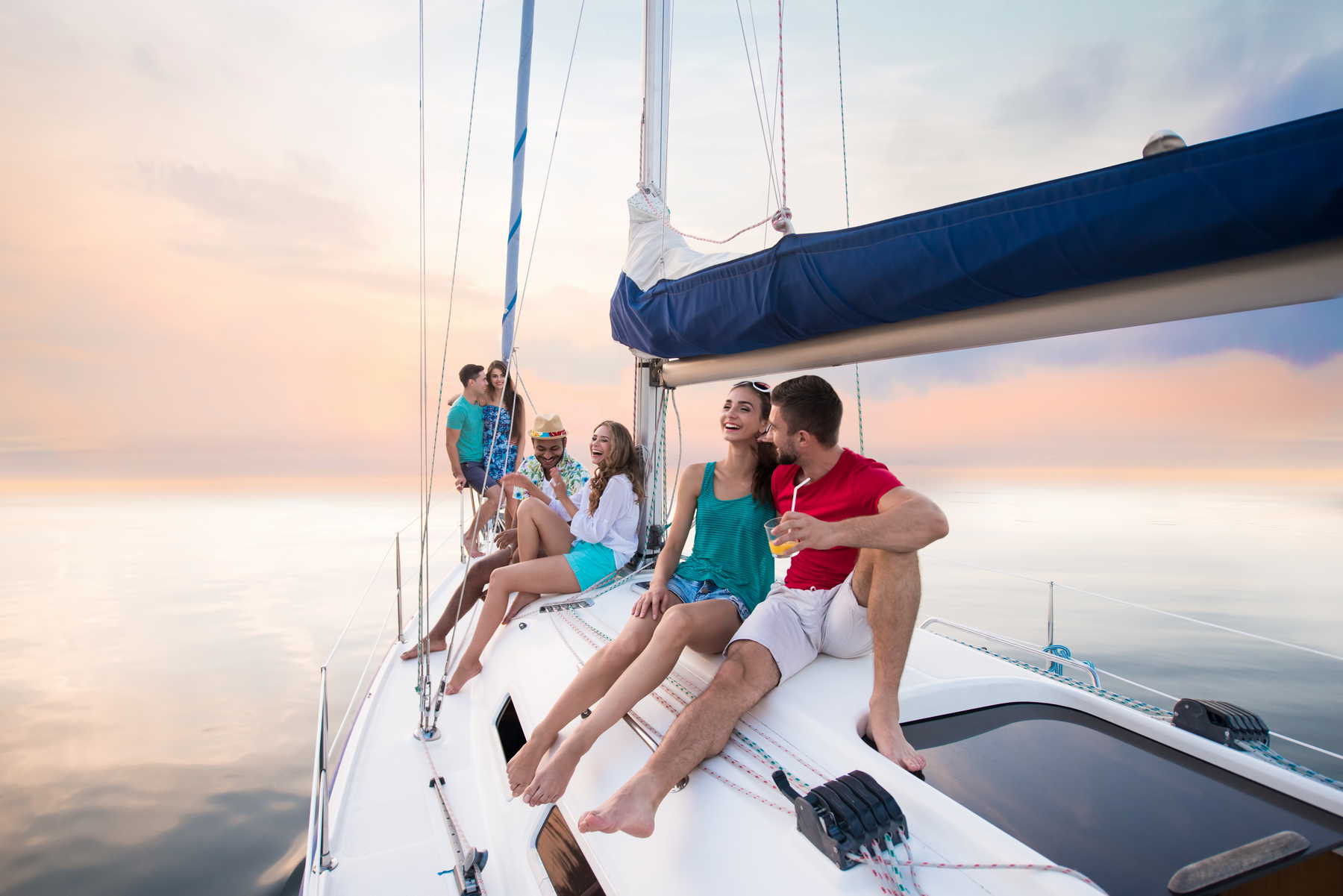
A quiet morning swimming stop in a protected bay might be followed by light diving or floating near a remote beach. Later, the mood may lift. Someone plays music. Laughter spreads. A calm cruise slowly becomes social, sometimes even playful, without ever feeling forced.
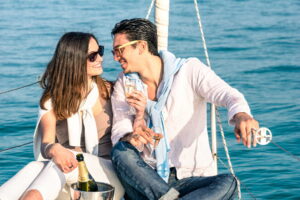
This flexibility is why sailing works for so many different types of people. A mixed group finds balance between connection and privacy. A relaxed party atmosphere can appear· or not. A bachelor celebration feels memorable without excess. An anniversary feels intimate without staging.
Even water sports, when they happen, emerge naturally. They are responses to conditions, not obligations on a schedule. Because nothing is rushed, moments feel real. They are the kind of moments people instinctively capture in photos and videos· not because they were planned, but because they happened.
The social geometry of the sea
One of the least discussed reasons sailing days stay memorable is how the sea changes social behavior. Open space softens hierarchy. The absence of walls changes conversation. On a boat, people are together without being crowded. Silence becomes acceptable. Laughter carries without pressure. This environment suits many travelers, but it is especially valued by women, families, and mixed groups. Safety is felt rather than asserted. Control comes from clarity and experience, not rules. The island tour becomes secondary and the setting becomes primary.
People do not remember which island they reached at what time. They remember floating together. Talking without urgency. Feeling present without distraction.
The economics of memory
There is also a practical dimension to why people return, and it has to do with money. Sailing is often assumed to be expensive. On paper, the price can appear higher than a ferry ticket or a single beach visit. But memory has a way of re-calibrating value. A sailing day consolidates what would otherwise be fragmented. Ferry tickets, transport, beach rentals, and multiple activities disappear into one coherent experience. The cost becomes easier to understand. The budget feels intentional.
Shared within a group, especially on a private sailing day, the experience often becomes surprisingly affordable. Some guests even describe it as cheap relative to what they received· not because it lacked quality, but because it delivered depth without complication.
This sense of value is reinforced after the trip. When people look back, they do not measure what they paid. They measure how complete the day felt.
Why return feels inevitable
People return to sailing not because they want to repeat the same route. They return because they want to re-enter the same state. The calm, the flow, the sense that time was used well.
Captain George does not promise identical days. The weather changes. The sea shifts. Different bays invite different moods. That variability is part of the appeal.
What remains consistent is judgement. Experience. Respect for the Cyclades and the people who sail through them. This consistency builds trust. Trust builds comfort. Comfort builds memory. And memory is what draws people back· not once, but repeatedly.