Most first-time sailors step onto our boat Annabella with quiet questions they rarely say out loud. Will the sea feel rough? Will the waves be too much? Will I feel safe? Will I enjoy this, or simply tolerate it?
These questions are natural. The Aegean is powerful, the Cyclades are known for wind, and sailing is often imagined as something demanding or technical. Yet, by the end of the day, most first-time guests aboard Annabella are surprised not by what they did but by how easy everything felt. Comfort at sea is not accidental. It is designed.
Experience that replaces uncertainty
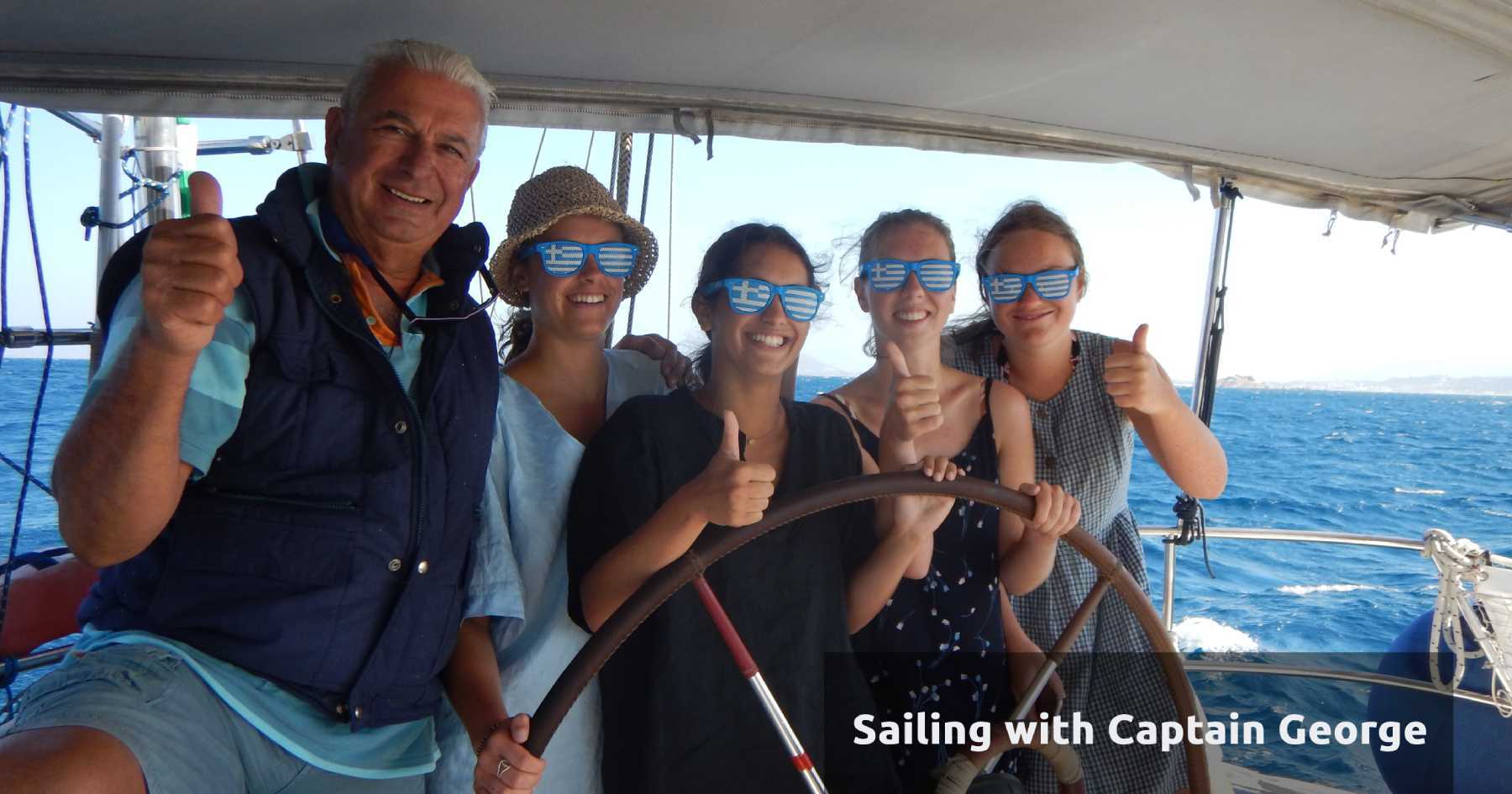
At the heart of this comfort is Captain George, whose relationship with the sea spans more than forty years of professional yachting, much of it spent navigating the waters of the Cyclades. This is not experience measured in certificates or miles alone, but in patterns learned, instincts refined, and decisions made long before guests ever notice them.
The Cyclades are not unpredictable to those who truly know them. Wind follows rhythms. Waves build and fade in recognizable ways. Certain bays remain calm when others do not. A weather forecast is not a warning· it is information to be interpreted.
Captain George does not fight the sea. He reads it.
Routes are chosen daily, sometimes hourly, adjusting to conditions that shift subtly across the Aegean. When the north wind strengthens, southern coastlines offer shelter. When the forecast suggests change, alternative remote bays are already in mind. This is how first-time sailors experience calm water not by chance, but by judgement.
For guests, this expertise is invisible and that is precisely why it works.
A boat that feels like solid ground
Comfort also comes from how the day is structured. Sailing from Naxos allows access to coastlines that naturally soften the sea. The boat, Annabella, rarely rushes. Movement is smooth. Stops are chosen where swimming feels instinctive, not cautious.
First-time sailors quickly notice something important: the sea feels cooperative.
Remote bays replace exposed beaches. A remote beach becomes a place to float, not brace against waves. Light diving feels natural, even for beginners. Water sports happen when conditions invite them, not when schedules demand them.
There is no pressure to participate. Sitting quietly is acceptable. Jumping in is optional. Learning to steer for a moment is an invitation, not a test. This absence of obligation allows people to relax without effort.
This is especially meaningful for women, families, and mixed groups, who often value stability and clarity over adrenaline. The environment feels open, respectful, and controlled· not by rules, but by experience.
People matter more than technique
Sailing days are not shaped only by wind and water. They are shaped by people. Captain George understands this instinctively. A private sailing day may unfold differently from a shared island tour. A relaxed party atmosphere may emerge· or not. A bachelor celebration, an anniversary, or a quiet day among friends all require different pacing, different energy, different decisions.
The sea provides space. The skipper provides rhythm.
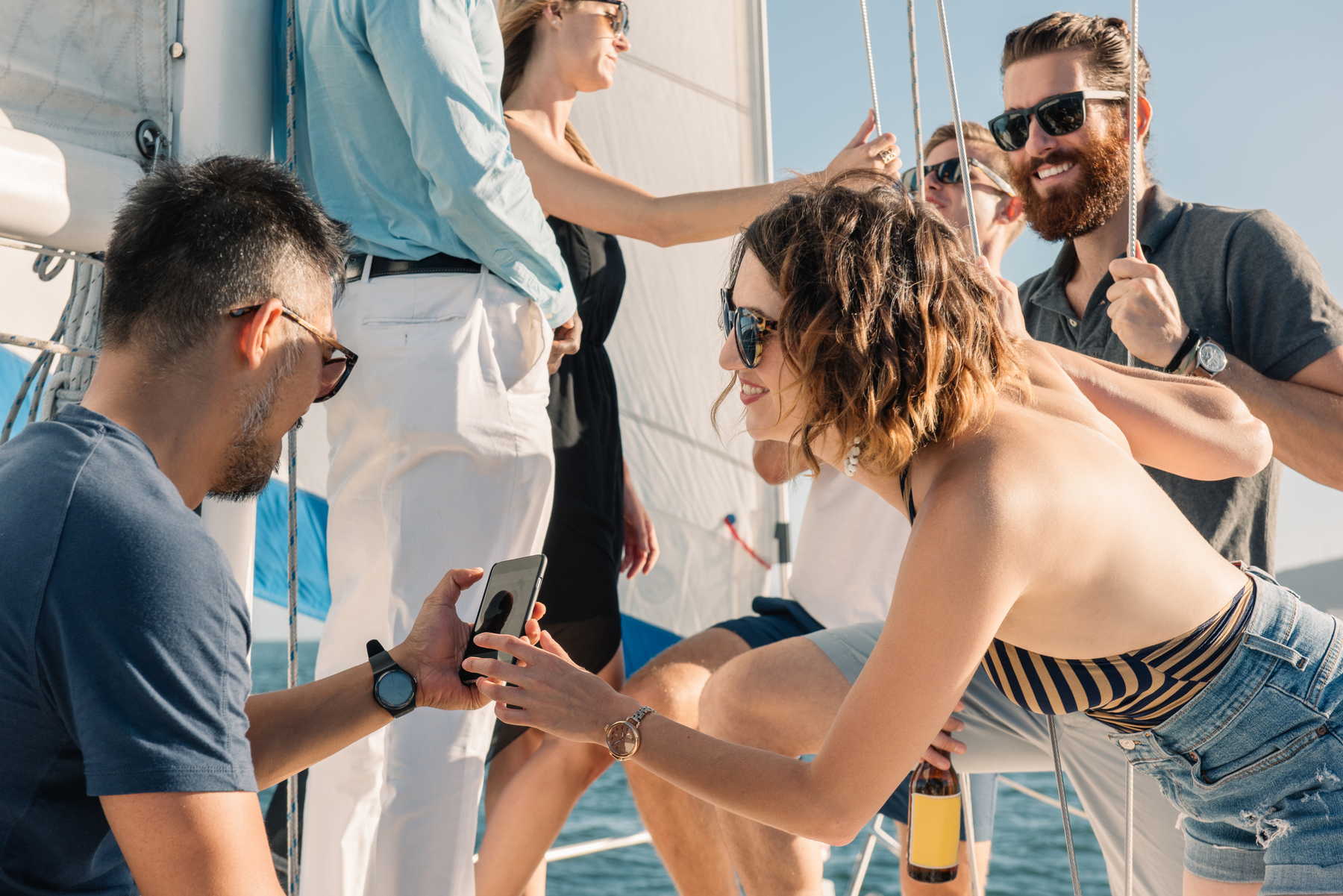
First-time sailors often comment on how quickly they forget their initial concerns. Conversation replaces vigilance. Laughter replaces tension. Moments appear naturally· moments worth capturing in photos and videos not because they were planned, but because they were unforced.
The quiet economics of comfort
There is also a practical side to feeling comfortable, and it has to do with money.
Sailing is often assumed to be expensive. Yet when guests look back on the day, the cost rarely feels excessive. One price replaces ferry tickets, transfers, beach rentals, and fragmented activities. The experience is consolidated, coherent, and complete.
Shared within a group, the day often becomes surprisingly affordable, sometimes even cheap when compared to trying to replicate the same variety on land. The budget feels controlled. The experience feels economic, not indulgent.
Comfort is part of that value. So is trust.
Why first-time sailors come back
By the end of the day, something subtle has shifted. Guests have not “learned how to sail” in the technical sense. What they have learned is something more important: that the sea does not need to be conquered to be enjoyed.
It needs to be understood.
That understanding, built from decades of experience, local knowledge, and quiet decision-making, is why first-time sailors feel at ease on Naxos Sailing. Not because the sea is always calm, but because it is always respected. People arrive curious and they leave confident.
And once the Aegean has been experienced this way, it becomes very difficult to imagine meeting it any other way.