Most travelers arrive in the Cyclades with a plan built around ferry schedules. They book tickets, wait at ports, follow fixed timetables, and measure distances in hours spent seated indoors.
It is efficient, familiar, and widely accepted as the default way to move between islands. Yet this approach quietly frames the sea as something to cross as quickly as possible, rather than something to experience.
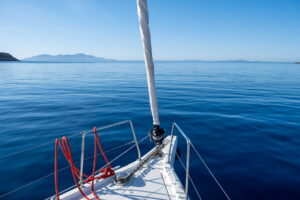
Sailing challenges that assumption from the very first moment. When you step onto a boat like Annabella, the sea stops being a gap between destinations and becomes the destination itself. The journey begins immediately, not after arrival. The horizon opens. Movement slows. The islands reveal themselves gradually, not abruptly, and that shift changes everything about how the Cyclades are experienced.
From transport to experience
A ferry follows a straight line. Sailing does not. A ferry ignores the coastline. Sailing traces it.
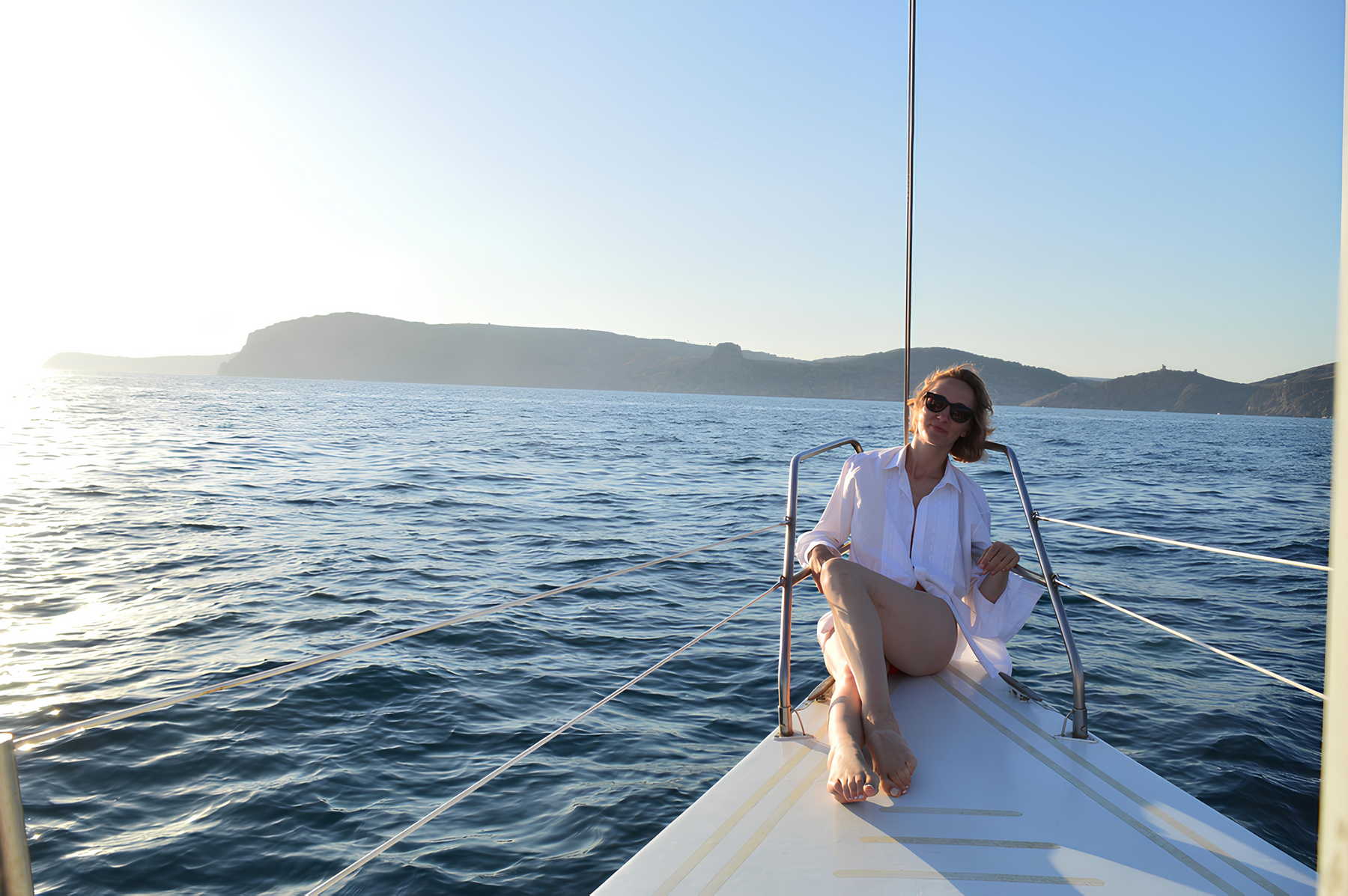
Instead of rushing past islands, a sailing island tour curves through sheltered bays, pauses near a quiet beach, and adapts continuously to the daily weather forecast. Waves are not fought against· they are read and worked with. Routes change slightly depending on wind direction, light, and sea state, creating a day that feels fluid rather than scheduled. This flexibility unlocks access to places ferries will never reach. Remote bays where the water remains calm even on windy days. A remote beach with no road, no umbrellas, no noise. Water so clear that swimming feels effortless and diving becomes a natural extension of floating rather than a planned activity.
These moments happen between islands, not after arrival. They are not attractions. They are pauses and they define the experience far more than any port ever could.
Time, space, and the rhythm of the sea
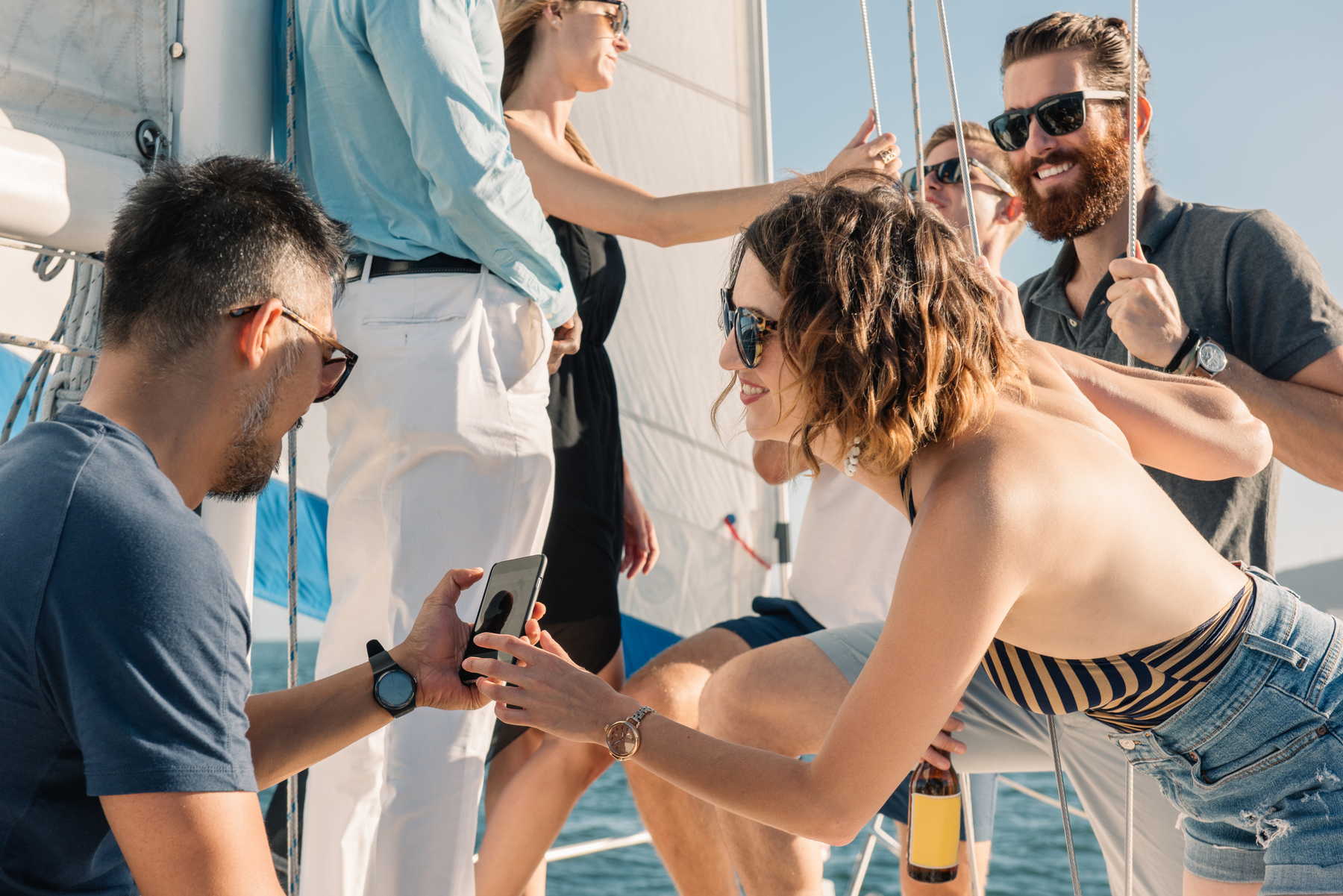
Time behaves differently at sea. Minutes stretch. Hours soften. A sailing day is not compressed into departure and arrival points. It unfolds gradually, allowing moods to shift naturally. A quiet morning swim can turn into relaxed water sports. A calm cruise may slowly evolve into a light party atmosphere without ever feeling forced. People move, sit, talk, or remain silent without pressure.
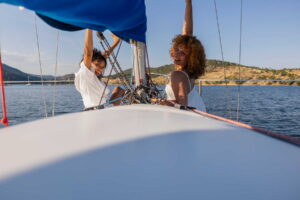
This rhythm suits many types of travelers. A group of friends finds balance between social and private moments. Couples celebrate an anniversary without needing a venue. A bachelor day becomes memorable without excess. Women traveling together often feel especially comfortable, as the open space removes the need to perform or compete for attention.
The sea regulates behavior and the boat becomes neutral ground. And because nothing feels rushed, guests naturally capture better photos and videos. Not staged images, but moments that feel honest because they were not interrupted.
The real economics of sailing
At first glance, ferries appear cheap. The ticket price looks low, especially when compared to yachting. But this comparison rarely accounts for the full picture. Ferry tickets are only the beginning. Transfers, car rentals, beach expenses, activity fees, and lost time quickly add up.
Sailing consolidates these scattered costs into one coherent experience. The price includes the boat, the crew, fuel, route planning, and access to locations unreachable by land. When shared within a group, especially on a private sailing day, the experience often becomes surprisingly affordable. In many cases, it is more economic than trying to recreate the same variety of experiences on land.
The money spent feels intentional rather than fragmented and the budget feels controlled rather than reactive.
And because the experience adapts to conditions, value is protected. If the weather changes, routes adjust. If the forecast shifts, the day evolves. Time is not lost. Expectations are not broken.
Why the sea route changes perspective
The biggest difference between sailing and ferries is not comfort or speed. It is perspective. Ferries treat the Cyclades as a collection of islands. Sailing reveals them as a connected system shaped by wind, water, and light. Once travelers experience the Cyclades this way, ferries begin to feel like shortcuts that missed the point.
Sailing does not move you faster. Instead, it moves you deeper. And once the sea becomes part of the journey, not just the space between destinations, it becomes very difficult to return to traveling any other way.